The year 1947 was not merely another chapter after the close of the Second World War; it was the hinge upon which the postwar world truly began. In a span of months, public consciousness was seized by unexplained phenomena, a quiet revolution in electronics laid the groundwork for the digital age, and the mechanisms of political fear began to reshape American culture. These distinct events created a profound echo of a world transforming, pushing society from the relief of victory into an era defined by Cold War anxieties, unprecedented technological progress, and a shifting cultural landscape. The public imagination was caught between unseen threats from above, perceived threats from within, and the quiet promise of a revolution in electronics.
The Sky Watches Back: UFOs Enter the Lexicon
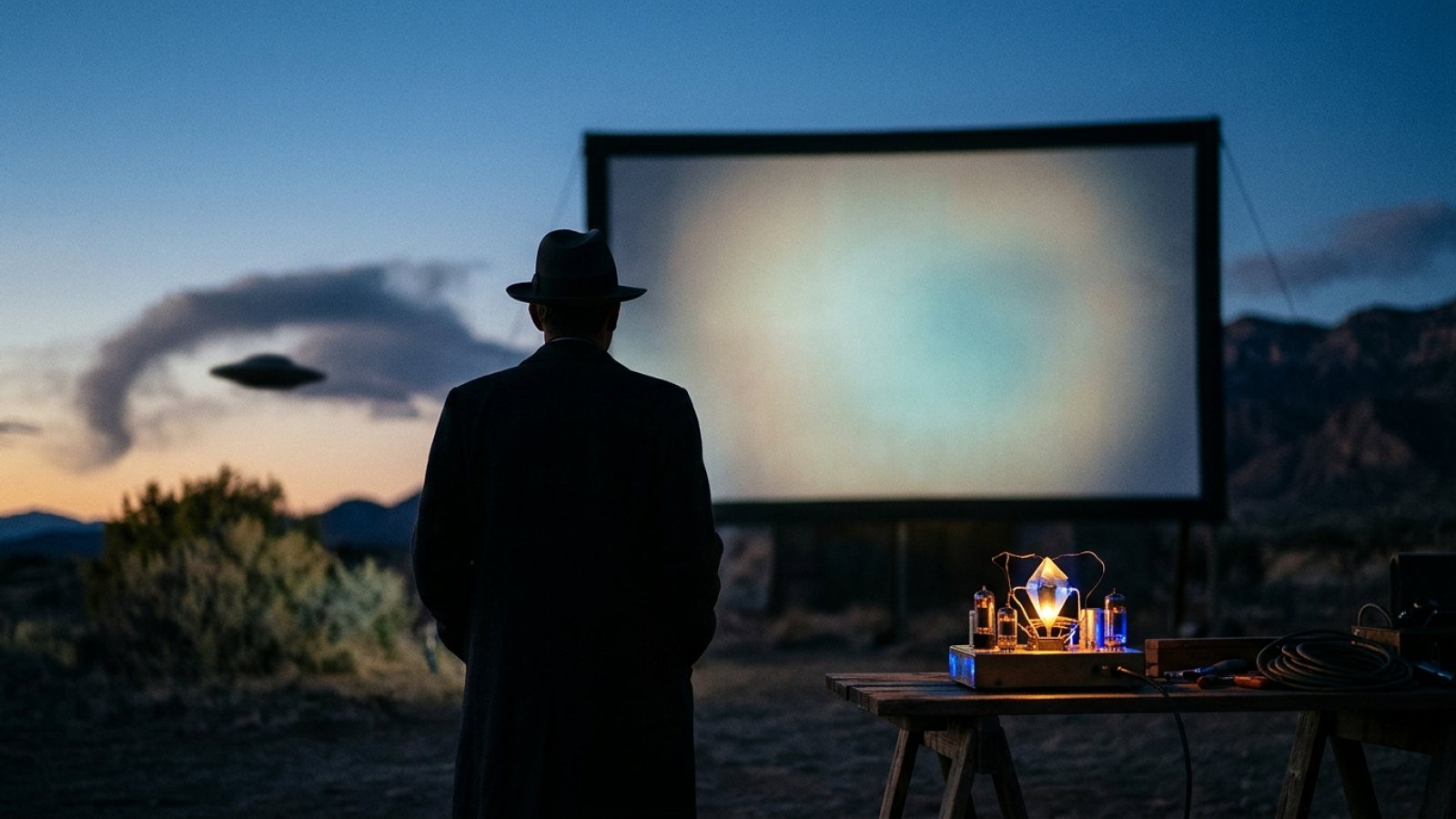
In June 1947, a private pilot named Kenneth Arnold reported seeing nine shiny, disc-like objects flying in formation near Mount Rainier, Washington. Arnold described their movement as like 'a saucer skipping across water,' a phrase seized by newspapers that quickly coined the term 'flying saucers.' This single event exploded into a nationwide phenomenon, launching the UFOs timeline into popular consciousness and initiating decades of sightings, investigations, and public fascination. The Arnold sighting was not the first report of strange aerial phenomena, but its vivid description and widespread media coverage sparked an immediate, fervent public discussion. Amidst the burgeoning Cold War, these unknown objects in the sky fueled a new layer of uncertainty and a sense that the world was larger and more mysterious than previously understood.
The Quiet Revolution: The Transistor's Genesis
While the skies above America captured headlines, a far quieter, yet infinitely more transformative, event occurred within the sealed environment of Bell Labs in Murray Hill, New Jersey. In December 1947, John Bardeen, Walter Brattain, and William Shockley successfully demonstrated the point-contact transistor. This tiny device, a semiconductor that could amplify electronic signals and switch electronic currents, promised to replace the bulky, fragile, and power-hungry vacuum tube. The invention marked the birth of the Tech timeline's modern era, signaling a future of miniaturization, portability, and unprecedented computational power. Though its immediate impact was not felt by the general public, the transistor was a technological 'big bang,' quietly setting in motion the forces that would define the second half of the 20th century, enabling everything from personal radios to the microprocessors of the internet age.
Hollywood's Un-American Question: The Hearings Begin
As anxieties mounted both in the skies and in the quiet labs, Washington D.C. became the stage for a different kind of drama. In October 1947, the House Un-American Activities Committee (HUAC) launched its investigation into alleged communist infiltration of the American film industry. This marked a dark turning point for both the Politics timeline and the Cinema timeline. The hearings, which summoned prominent screenwriters, directors, and actors, were aimed at rooting out perceived disloyalty and shaping the narrative of American identity in the emerging Cold War. The refusal of ten witnesses, known as the 'Hollywood Ten,' to answer questions about their political affiliations on constitutional grounds led to their contempt of Congress convictions and subsequent blacklisting. This action sent a chilling message throughout Hollywood, fostering an atmosphere of fear and self-censorship that would profoundly impact creative output for years to come. The industry, a powerful shaper of public opinion, found itself under intense scrutiny, its stories and storytellers vetted for ideological purity.
These three distinct events in 1947 — the widespread reports of 'flying saucers,' the invention of the transistor, and the HUAC hearings targeting Hollywood — collectively heralded the true beginning of the postwar world. They were not directly causally linked but resonated with the same undertones of a society grappling with rapid change, unseen forces, and the struggle for control over information and narrative. The mysteries of the sky, the silent promise of technology, and the fraught battle over artistic freedom converged, setting the stage for decades defined by both astonishing progress and profound ideological conflict.