
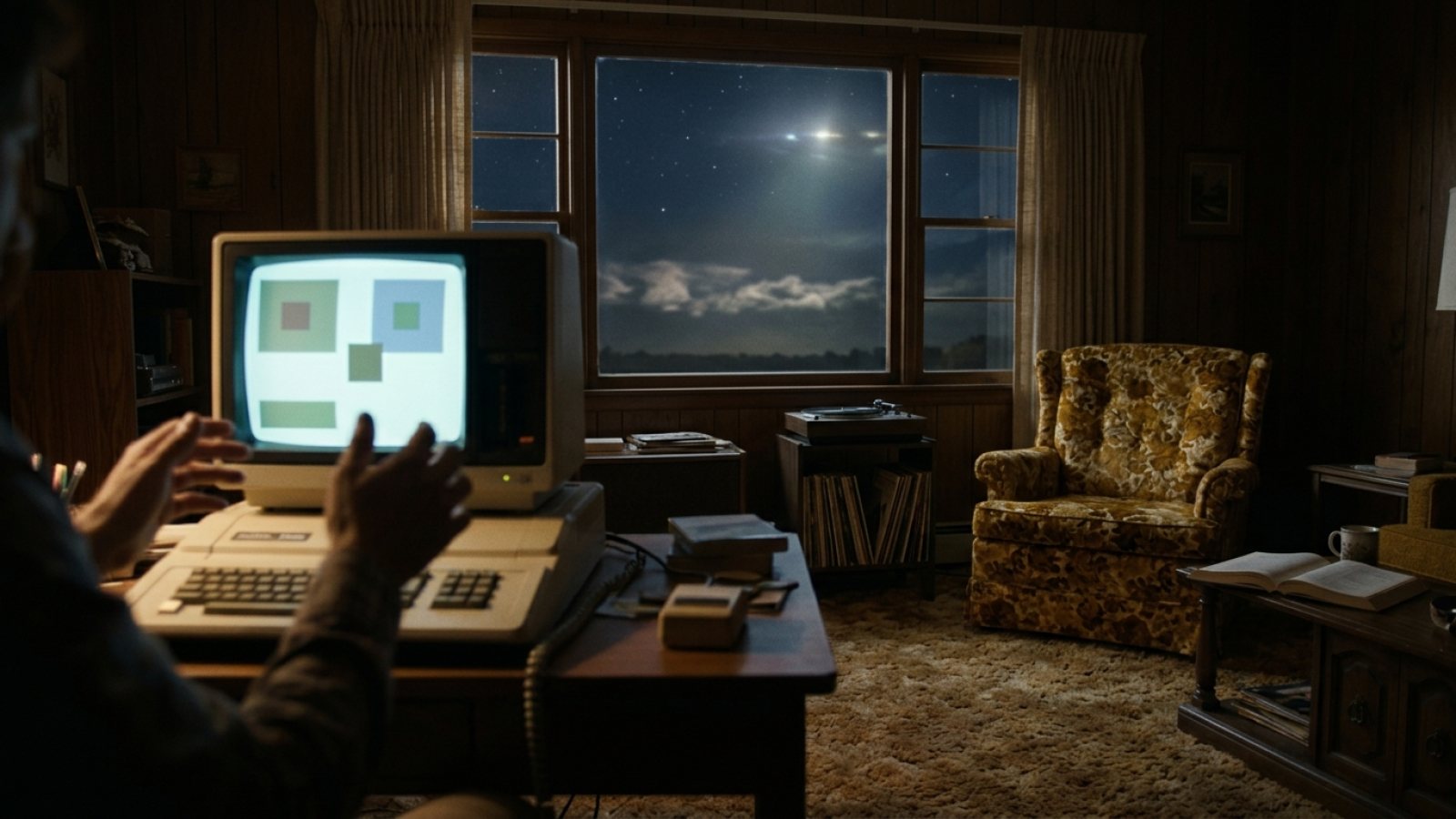
1977: When the Future Arrived
In 1977, two seminal science fiction films ignited public imagination while a personal computer brought the future into homes. This year marked a profound convergence, acting as a catalyst for new eras in technology, cinema, and the human perception of possibility.
1977 was not merely another year in the march of progress; it was the moment the future, long an abstract concept, decisively moved into the mainstream imagination and onto the domestic desktop. Across the timelines of Cinema, Sci-Fi, Tech, and even UFOs, a powerful confluence of events acted as a single, undeniable catalyst, reshaping popular culture and setting the stage for decades to come.
A Galaxy Far, Far Away
The most immediate impact arrived on May 25, 1977, with the premiere of George Lucas’s Star Wars. This film, initially released in a limited number of theaters, transcended its genre to become a cultural phenomenon. Its immersive universe, populated by droids, Wookiees, and Jedi Knights, offered an unparalleled escape. On the Cinema timeline, Star Wars did more than break box office records; it redefined the summer blockbuster, shifting industry focus towards wide releases, merchandise, and sequels. Its special effects, pioneered by Industrial Light & Magic, set new benchmarks for cinematic realism, demonstrating what advanced technology could achieve on screen and directly influencing the future of film production. Within the Sci-Fi timeline, Star Wars revitalized a genre often relegated to B-movies, proving its mass appeal and opening doors for more ambitious and expensive productions. It presented a future that was both fantastical and grounded, a lived-in universe that felt expansive and real.
The Personal Computing Revolution
Just weeks after Star Wars began its ascent, on June 10, 1977, the Apple II personal computer was released. While less theatrical than its cinematic counterparts, the Apple II was arguably the most significant long-term cause of the future arriving. Designed by Steve Wozniak, it was one of the first highly successful mass-produced microcomputers, complete with a color graphics display and an open architecture that encouraged third-party development. For the Tech timeline, the Apple II was a watershed moment, moving computing from the domain of corporations and enthusiasts into homes and schools. It demystified technology, placing powerful tools directly into the hands of individuals. This machine laid the groundwork for the digital revolution, empowering a generation of programmers, designers, and entrepreneurs, whose innovations would eventually touch every facet of modern life, including the very methods used to create future films and music.
Making Contact
As the year drew to a close, November 16, 1977, brought Steven Spielberg’s Close Encounters of the Third Kind. Where Star Wars depicted a grand space opera, Close Encounters offered a more intimate, wondrous, and sometimes terrifying vision of first contact. It explored the human impulse to understand the unknown, using light and sound as the universal language for communication. On the Cinema timeline, Close Encounters further showcased the potential of advanced visual effects, particularly in its breathtaking depiction of the alien mothership. Its memorable five-tone musical motif, composed by John Williams, demonstrated how Music could be integral to narrative and emotional impact, creating a sonic language that transcended dialogue. Critically, for the UFOs timeline, the film capitalized on and simultaneously amplified a pervasive public fascination with unidentified flying objects. It presented the concept of extraterrestrial intelligence not as invaders, but as mysterious, benevolent, and technologically superior beings, feeding a long-running public debate about unexplained aerial phenomena. The film's wonder-filled premise acted as an echo of the widespread hope and anxiety surrounding human interaction with the cosmos.
The Future Takes Root
Taken together, the releases of Star Wars, the Apple II, and Close Encounters of the Third Kind in 1977 represent far more than a coincidence of dates; they mark a profound catalyst for the decades that followed. The films ignited public imagination, pushing the boundaries of what was possible on screen and in our perception of the universe. The Apple II, meanwhile, provided the tangible tools that would enable countless individuals to build the actual future—a future that often mirrored the sci-fi visions presented by its cinematic contemporaries. This convergence wasn't just about entertainment or technology; it was about a collective shift in human expectation, a belief that the fantastical was becoming attainable, and that the universe was larger and more accessible than ever before. The reverberations of 1977 continue to shape our digital lives, our cinematic experiences, and our ongoing quest to understand what lies beyond.
